
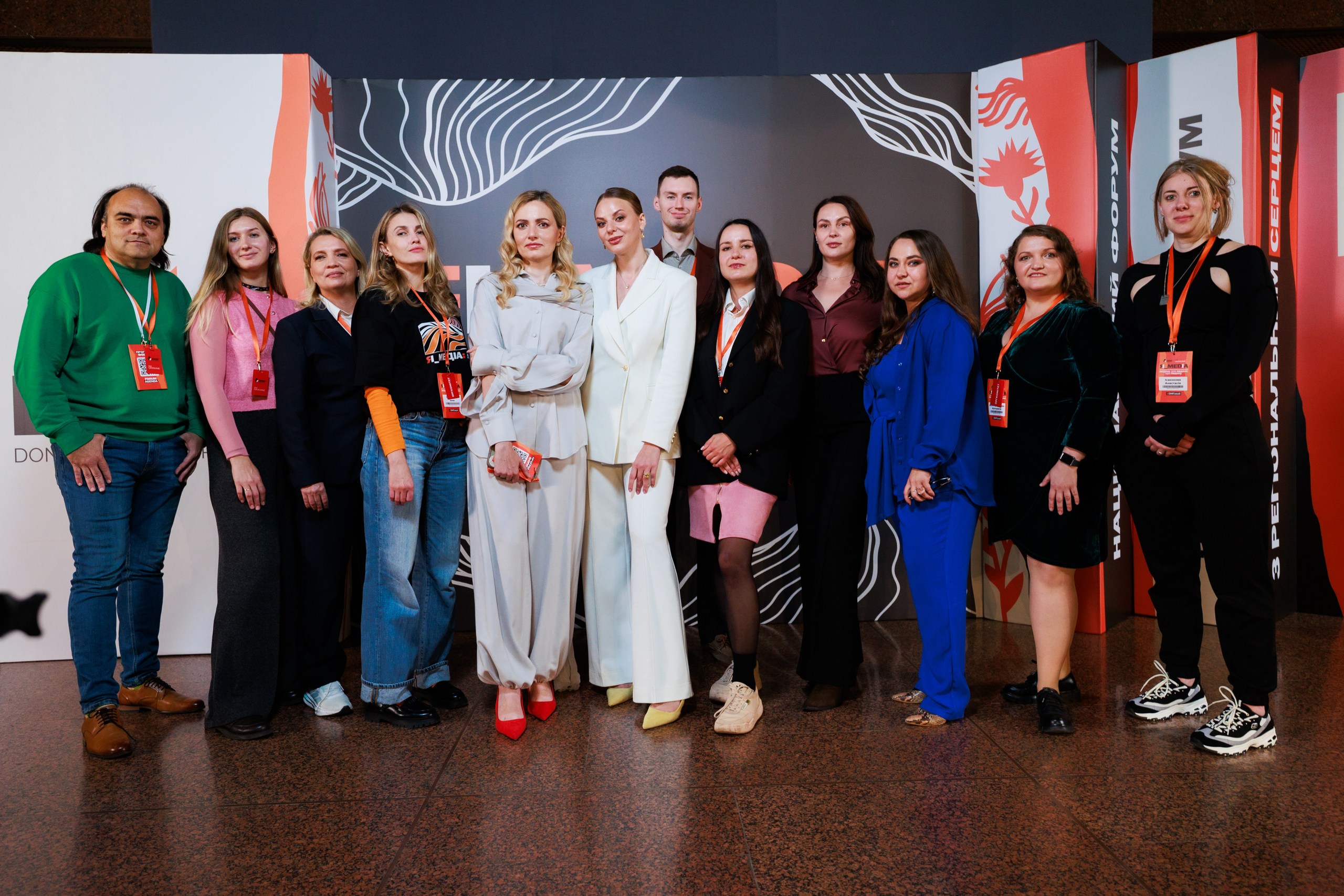
This year, DMF 2026 brought together 1,397 participants from across Ukraine and abroad, and the Forum program featured 82 events — public discussions, workshops, research presentations, public interviews and anti-corruption debates. Participants could also watch 10 documentary films, visit 9 partner exhibitions, receive almost 160 one-on-one expert consultations on a range of topics, complete nearly 200 training sessions on the “Chuika” drone detector, register as posthumous organ donors, donate blood, join a running initiative, and pick up a variety of perks from corporate partners.
This year’s Forum was co-organized by DII-Ukraine and the Ministry of Culture of Ukraine. It took place on 8–10 October at the National Museum of the History of Ukraine in the Second World War.
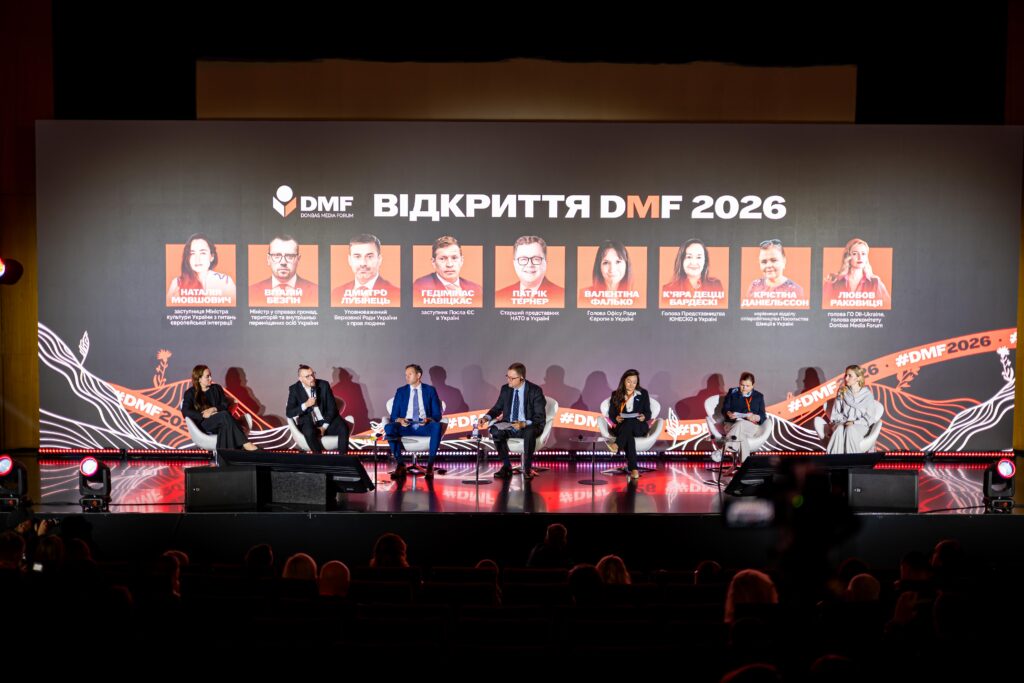
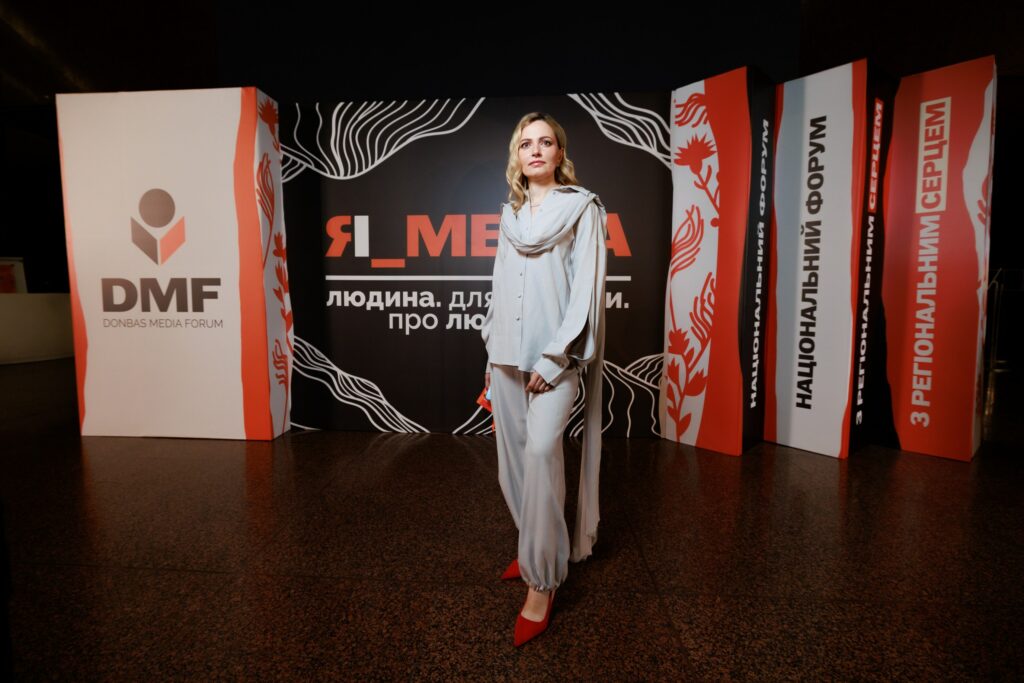
This year’s theme put people at the center: “I_MEDIA: by the human — for the human — about the human. In a world of wars, geopolitics, pervasive AI and broken connections — how do we bring people, safety, rights and dignity back into focus.” It brought together many important conversations — from ethical standards in journalism to war reporting, from the mental health of media professionals to the financial sustainability of newsrooms, from a culture of respect to the use of technology.
The Forum program was built democratically and inclusively, co-created with many partners — media, civil society and humanitarian organizations, government bodies and international institutions. In May, the Forum’s Organizing Committee launched an open call for program proposals and received more than 200 ideas and concepts, ultimately resulting in 82 events and other activities.
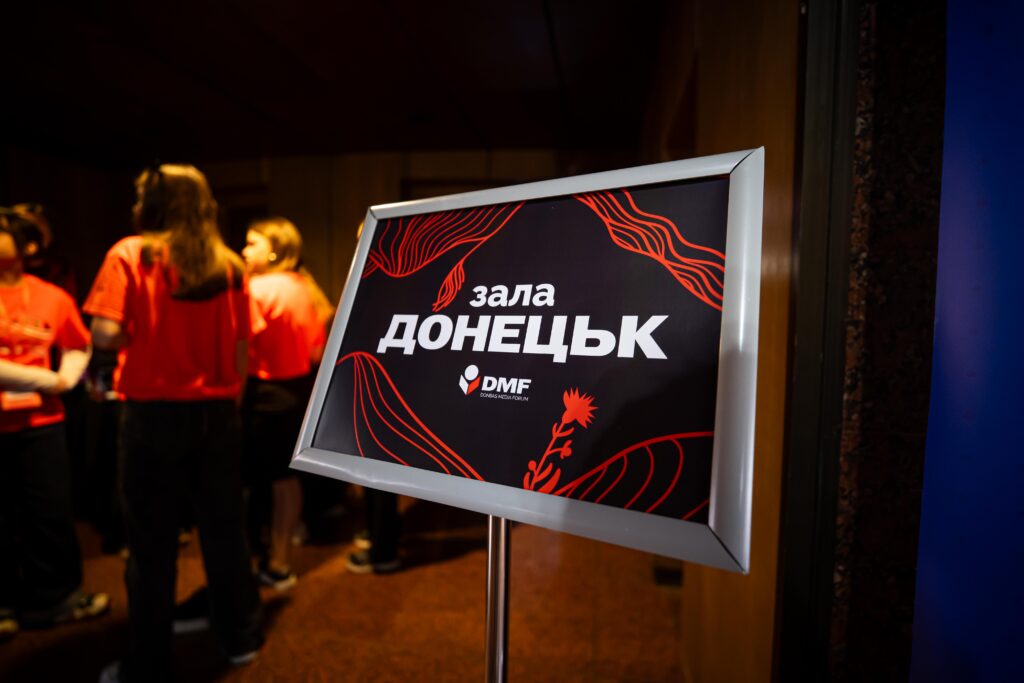
Every year, Donbas Media Forum names the halls hosting its parallel sessions after Ukrainian cities that are temporarily occupied. In this way, the occupied cities symbolically become part of DMF. We bring them back into public space and keep talking about them, because behind every name on the map are people — those who remain there, live under occupation, resist and wait for liberation. And those who were forced to leave, who can return to their home Ukrainian cities at least symbolically — Donetsk, Luhansk, Berdiansk, Kakhovka, Mariupol, Lysychansk, Yalta — and feel at home again.
Throughout the venue, participants could also see ornaments featuring plants typical of Ukraine’s eastern steppes: feather grass, Heufler’s spleenwort and the Donetsk cornflower. At first glance, these are just small elements of a graphic pattern, but behind these symbols a whole landscape opens up in the imagination: steppes, rocky slopes and the valleys of the Siverskyi Donets.
“Over 11 years, Donbas Media Forum has grown into Ukraine’s largest media event — a national platform with a regional heart. It is a safe space where national and local media speak side by side, and where the occupied territories and the people living there stay visible. And this was probably the hardest preparation for Donbas Media Forum in all these years. As the attacks on Kyiv intensified, we were constantly assessing security risks, consulting within the team, and receiving numerous requests to possibly change the date, venue, or format of the Forum. We felt our responsibility very acutely for everyone who would be part of this event — participants, speakers, the team, volunteers, partners, and the people working at the venue. Yet even on the most anxious days, people kept registering and planning to attend. And at some point, one journalist put into words very precisely what we all felt: our work does not stop just because missiles and drones are flying over our heads. Journalists keep working, newsrooms keep running their projects, teams keep growing, searching for new formats and responding to new challenges. That is why, for me, this year’s Forum became a very concrete expression of resilience. And not only the resilience of the team that organized it. It is the resilience of the entire community that works in wartime and does not put its professional responsibility on hold. Not because we fail to see the risks or have grown used to danger. On the contrary — we see them very clearly, we take them into account, we change plans, we look for safer solutions, and we still keep doing our work,” said Liubov Rakovytsia, Head of DII-Ukraine and of the DMF Organizing Committee.
This year, the program included 9 special discussions within the “War and Media” track, which were not announced publicly in advance for security reasons. There, representatives of military units responsible for media relations and other military affairs experts could openly discuss, together with journalists, the pain points in their everyday cooperation.
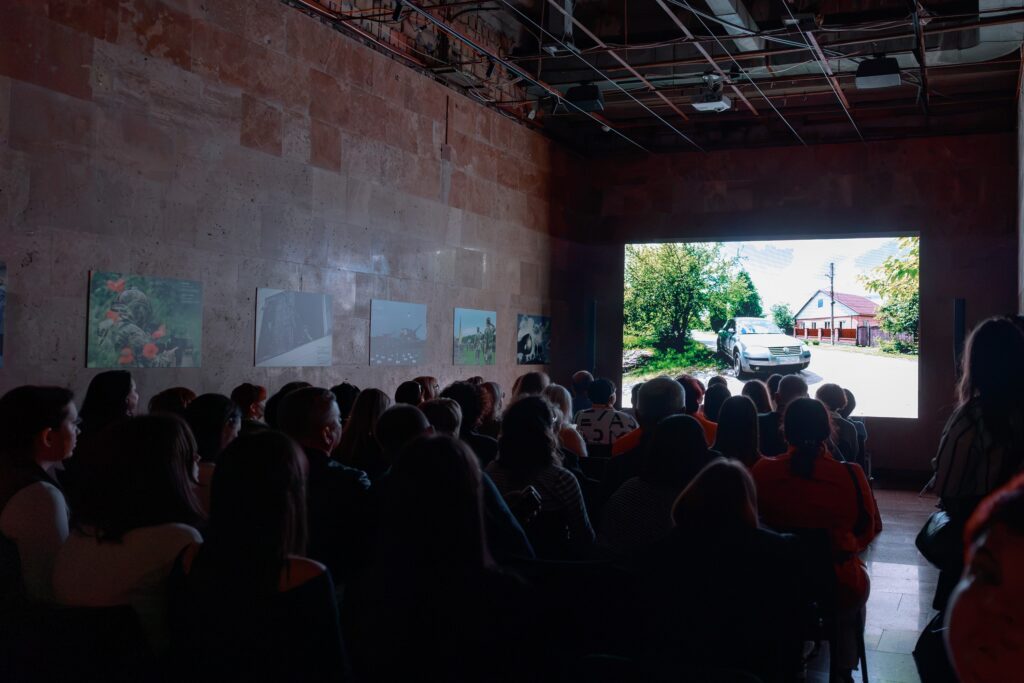
In keeping with a long-standing tradition, the Forum had a cinema hall where participants could watch 10 documentaries made by media professionals and then discuss them with the filmmakers and the people featured in them. The program included the following films: “To the Sound of Sirens” and “They Have Been Waiting for Four Years. Stories of Two Families of Civilian Captives” (Public Interest Journalism Lab), “The Last Prometheus of Donbas” (Anton Shtuka), “Witnesses. Place of Birth” (Maryna Kronhlevska / Docudays UA, Docuclub), “We Go Because They Are Waiting for Us: The Story of a Couple Who Deliver a Newspaper to Frontline Villages of Ukraine” (National Union of Journalists of Ukraine), “Djinn in the Air” (Serhii Lysenko / Docudays UA, Docuclub), “Traces” (Alisa Kovalenko and Marysia Nikitiuk / Docudays UA, Docuclub), “Our Own” (Nakypilo, with the support of IMS), “Covering the War in Ukraine: Journalists Tell Their Stories” (RSF), and “Warriors of Science” (Multimedia Platform of Foreign Broadcasting of Ukraine in cooperation with the National Antarctic Scientific Center).
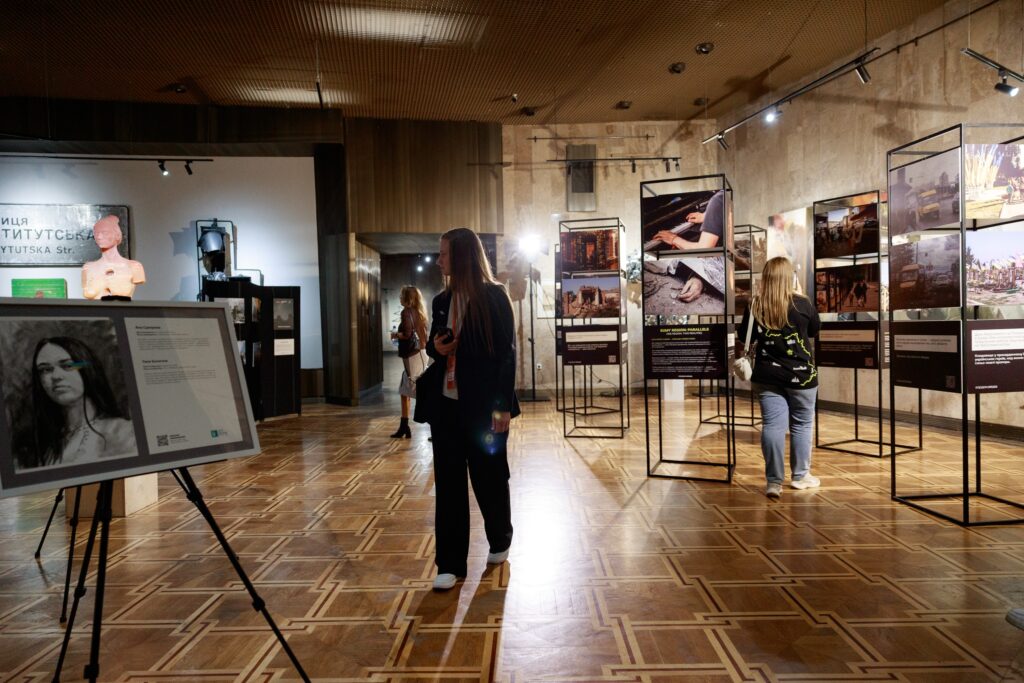
Participants could visit 9 exhibitions prepared for the Forum by partners: the interactive exhibition “Perceptions of Corruption and Anti-Corruption Tools” (National Agency on Corruption Prevention, with the support of the Institute for War & Peace Reporting); the memorial space “Present” (Georgiy Gongadze Prize, as part of the RECviem project, created specially for Donbas Media Forum; the video was produced together with the team of the Memorial platform); the photo exhibition “In the Embrace of Strength” (Hromadianyn Charitable Foundation, with the support of the International Renaissance Foundation); the exhibition “Civilians in Captivity: Stories of Unlawful Detentions” (Media Initiative for Human Rights); the photo exhibition “Between the Explosions” (Nakypilo, with the support of the Kharkiv–Nuremberg Partnership Society and the Nuremberg House cultural and educational centre); the photo exhibition “SUMY REGION: PARALLELS. One Region. Two Realities” (Kordon.Media, with the support of the European Union and the German Marshall Fund of the United States Transatlantic Foundation); the interactive space “League of the Strong: Media Without Barriers” (League of the Strong NGO); the exhibition “Courage of the Word” (IMI, with the support of the EU); and a presentation area for the book “Commanders of Victory” (Ukrinform news agency).
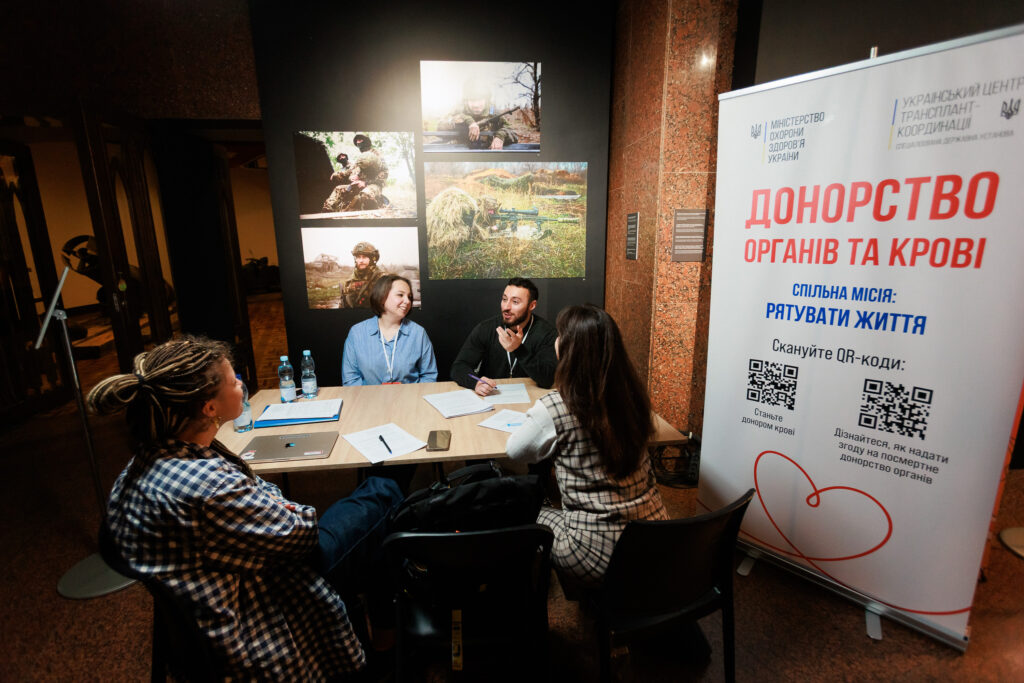
Over the three days of the Forum, experts from various organizations working in the “Safety Corner” provided almost 160 one-on-one consultations to participants. The consultations covered: sending letters of support to Ukrainian journalists held in Russian captivity (ZMINA Human Rights Centre); producing video content for social media and video storytelling (experts supported by partner organisations Fondation Hirondelle and the Institute of Regional Media and Information); access to public information and other questions for media lawyers (Human Rights Platform); digital security and rapid response mechanisms (an expert from partner organisation Free Press Unlimited); reporting corruption and the adoption of anti-corruption laws (NACP); accessibility and appropriate media communication about people with disabilities (League of the Strong); mine risk awareness (HALO Trust in Ukraine); open-source research using the Lenses tool (War Archive); and transplantation and posthumous organ donation (Ukrainian Center for Transplant Coordination). Notably, 5 participants have already used the opportunity — offered at DMF for the first time this year — to sign their consent to posthumous organ donation right at the Forum. The Safety Corner at DMF 2026 was made possible with the support of Free Press Unlimited.
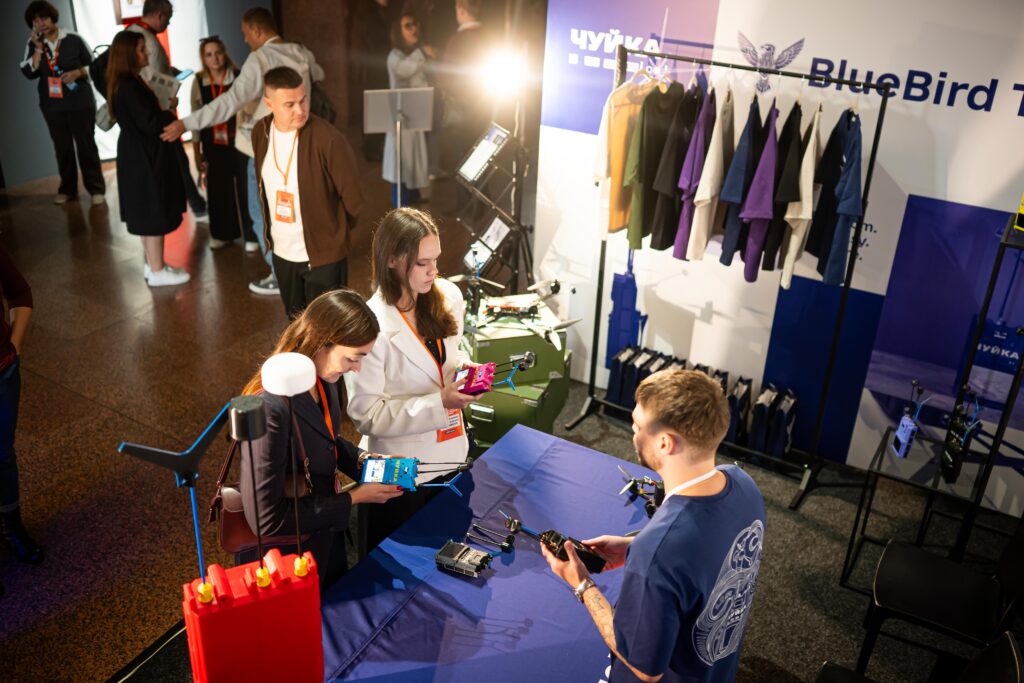
The Forum also hosted a permanent training point for the “Chuika” drone detector. Over three days, BlueBird Tech experts held up to 200 training sessions. Participants could practice mounting antennas to detect analog drones across different frequencies and learn how the device works — a tool that helps many journalists protect themselves during assignments in frontline areas.
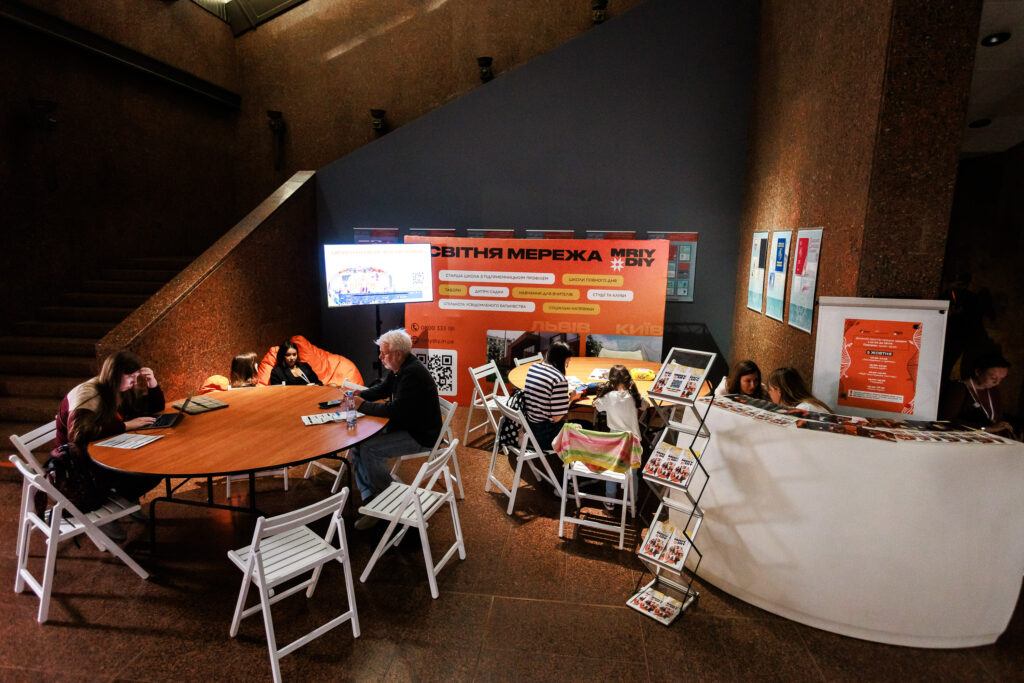
For the second year running, the Forum also had a Children’s Space, where children could take part in a variety of workshops while their parents attended discussions. This year, the Children’s Space was organized by DMF partners from the MriyDiy educational network. We will continue to make sure that parents working in media can safely leave their children in the care of educators while they network at a professional event.
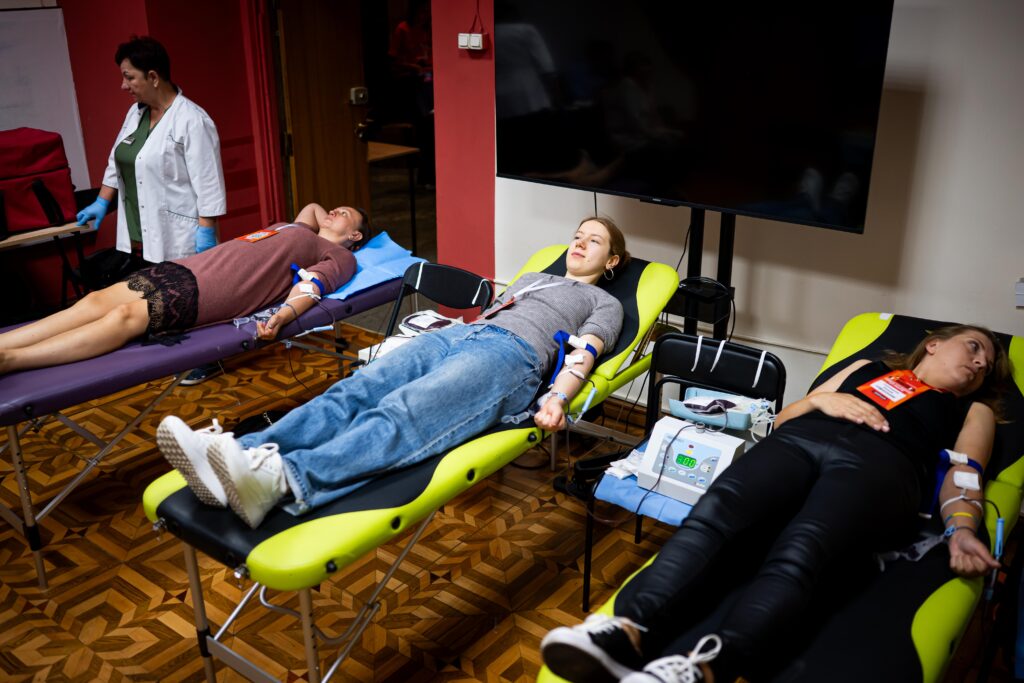
On the morning of 9 October, DMF held its traditional blood drive. 15 participants donated blood, which will help save 45 lives, since donated blood is usually separated into three components. The blood drive was run by specialists from the M. M. Amosov National Institute of Cardiovascular Surgery.
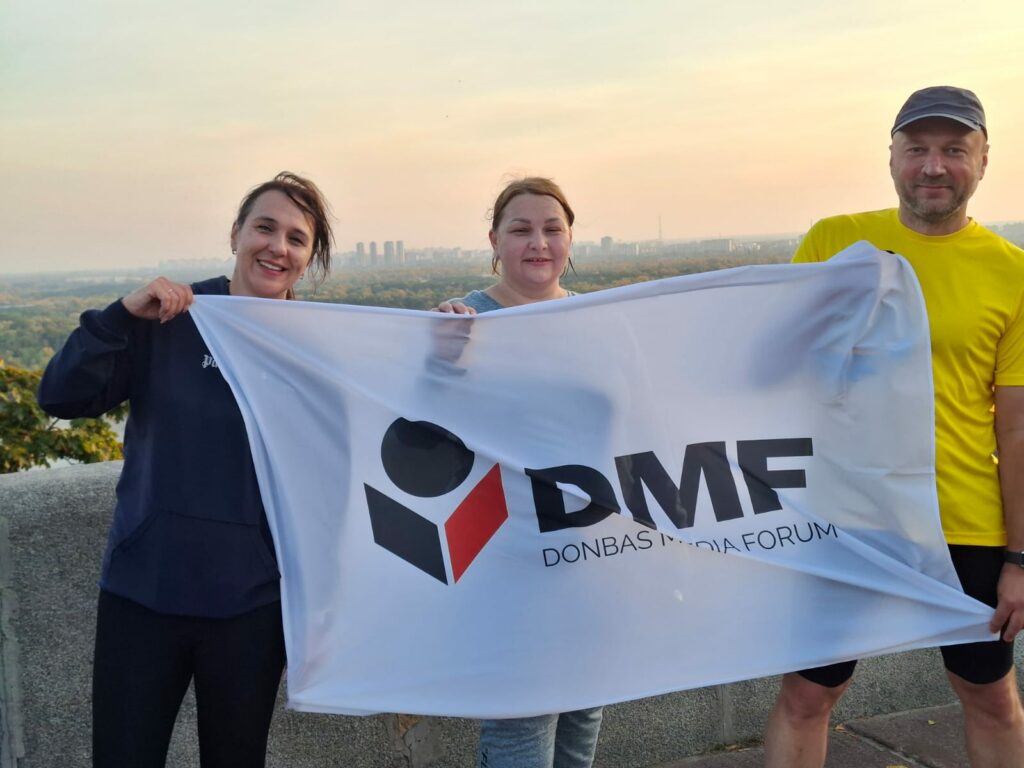
In addition, this year DMF participants self-organized in the shared participants’ chat and launched the DMF Run Club to add a sporting element to the event. On the morning of 9 October, before the Forum program began, three runners completed a 5 km run and greeted the sunrise. The Forum’s Organizing Committee recognized the initiators with exclusive symbolic gifts.
The Forum was supported by: the Delegation of the European Union to Ukraine, the Ministry for Foreign Affairs of Sweden and the Swedish International Development Cooperation Agency (Sida), the Embassy of the Federal Republic of Germany in Ukraine, the Norwegian Ministry of Foreign Affairs, the Ministry of Foreign Affairs of Denmark, Prague Civil Society Centre, International Media Support, the Institute for War & Peace Reporting (IWPR), Reporters Without Borders, the Council of Europe, People in Need, Free Press Unlimited, the Partnership for a Strong Ukraine, NATO, the European Union Anti-Corruption Initiative in Ukraine (EUACI) and UK International Development, UNESCO and the people of Japan, Fojo Media Institute, Fondation Hirondelle, and the International Renaissance Foundation.
The program partners of DMF 2026 were: the Institute of Mass Information, Detector Media, Reporters Without Borders, Human Rights Platform, Transparency International Ukraine, Informed, Internews-Ukraine, the Centre for Democracy and Rule of Law, the Regional Press Development Institute, Kyiv School of Economics, the National Council of Television and Radio Broadcasting of Ukraine, the Office of the Ombudsman of Ukraine, the National Anti-Corruption Bureau of Ukraine, IDEM expert platform, the Ministry of Youth and Sports of Ukraine, the Bring Kids Back UA initiative, the National Agency on Corruption Prevention, the Institute of Regional Media and Information, Mnozhyna Foundation, Ukrinform news agency, the Georgiy Gongadze Prize, the Media Initiative for Human Rights, Suspilnist Foundation, Kordon.Media, Recovery Window, Maie Sens, Nakypilo, League of the Strong, Hromadianyn Charitable Foundation, YouControl, Between Media Agency, Daily Humanity, ZMINA Human Rights Center, Docudays UA, Docuclub, Public Interest Journalism Lab, the National Union of Journalists of Ukraine, and Suspilne.
We would also like to thank the corporate partners of Donbas Media Forum 2026, who helped organize events, supported important initiatives, and prepared special offers for participants. At registration, participants could pick up a flyer with partners’ discount promo codes. If you did not receive a printed copy, you can still use the offers via the digital flyer. Special offers were prepared by MriyDiy, hotline.finance, PROM WORKSPACE, Green Country, Nash Format, Peremoga, Cases, Family Quest, BrainToria and Wood Mood.
The blood drive was also an important part of the Forum. We thank Nash Format, Enzym Group, ARBER and Good Bread from Good People for joining this initiative as partners.
ARBER and ZARINA were the Forum’s style partners and supported the Forum team by providing clothing and jewelry for Liubov Rakovytsia, Head of the DMF Organizing Committee, and Mariia Vereitina, Head of Strategic Partnerships at DII-Ukraine.
Special thanks to ARBER and ZARINA for the prizes for the Forum participants’ giveaways: a UAH 5,000 gift certificate for ARBER clothing — for blood donors, and a piece of jewelry from ZARINA — for those who donated to DII-Ukraine’s Cluster of Relocated Media project.
Due to technical circumstances, we were unable to hold the giveaways before the Forum closed. However, the organizing team will definitely hold them soon on Donbas Media Forum’s Instagram page. We will announce the date and time on social media, so follow us to make sure you don’t miss the results.
Side events by corporate partners were another important part of the program. EPAM held a cybersecurity workshop, and Kormotech joined the Forum program with its own panel discussion. Events like these create space for sharing experience, professional development and meaningful dialogue between media and business.
The information partners of DMF 2026 were: Novyny Donbasu, the Global Forum for Media Development (GFMD), the Multimedia Platform of Foreign Broadcasting of Ukraine, LIGA.net, NV, 5 Kanal, Kyiv 24, hromadske, Hromadske Radio, My-Ukraina, Realna Gazeta, Slawa TV, LMF, and United24 Media.
As a reminder, Donbas Media Forum is an annual conference created by journalists for journalists. The Forum was first held in 2015, after Russia’s war began in 2014, when journalists from the Donetsk and Luhansk regions were the first to face new challenges in their professional work — from relocating newsrooms to covering events on the front line.
Every year, the Forum brought together a growing number of media professionals from across the country and around the world who covered Donbas-related issues. In 2018, the Forum became the main platform for regional journalists and local media from all regions. After Russia’s full-scale invasion, it became the country’s largest media event. Donbas Media Forum remains a national platform with a regional heart.
Over the years, the Forum has been held in Kyiv (2015, 2023, 2024, 2025), Mariupol (2016), Sviatohirsk (2017), Kharkiv (2018, 2019), online (2020, 2021) during the pandemic, and in Warsaw (2023) as DMF Global. Yet every year, there is one main wish — to hold it next year in our home Ukrainian city of Donetsk.
Thank you for being with us! See you at #DMF2027